
Two seminars for International & Dutch Master students by Dr. Katerina Pouliasi People tend to feel more comfortable with people that are similar to them. Life in multicultural environment, however, gives you an unique opportunity to gain insight into different cultures and orient yourself towards aquiring a ‘multicultural mind’. These two seminars will help you […]
Author: @dmin
International conferences
Papers Katerina Pouliasi has presented at international conferences Cultural trends in self-evaluations among early adolescents: Inter-generational studies in the Netherlands and Greece. 13th Biennial Conference of the European Association for Research on Adolescence, Spetses, Greece, 9/8-1/9/2012 (with K. Phalet) Networks of meaning: A cross-cultural study of the bicultural mind. Paper in the symposium: Fitting in: How biculturals negotiate […]

On public policy and scientific research
Building bridges between scientific research and public policy To identify best practices in the use of research findings on migrants and cities in the European context for policy development we conducted interviews and surveys in 10 European countries. The project was part of the UNESCO-MOST programme on Multicultural Policies and Modes of Citizenship in European Cities […]
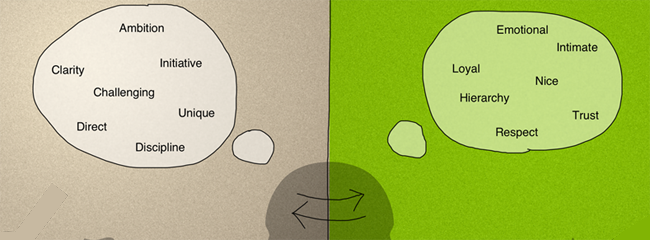
On acquiring a bicultural mind
The contemporary societal relevance Present-day social mobility can only be expected to increase the number of individuals who have more than one cultural origin. This holds especially within the territory of the European Union, where free movement is facilitated by legislation affecting some four hundred million people. In the Netherlands alone, there are half a […]
Culture on spontaneous associations and how they are networked

Work, Friendships and the Self Does culture influence the spontaneous associations people make as response to cues in the environment? We have asked individuals with different cultural background to report their spontaneous associations on certain words presented to them in their own language.
My publications in peer-reviewed journals
Networks of meaning and the bicultural mind

Abstract: The paper examines cultural frame-switching among bicultural participants at the level of associated meanings. Bicultural participants of Greek descent who live in the Netherlands were randomly primed with either Greek or Dutch cultural symbols and language. A monocultural Dutch group in the Netherlands and a monocultural Greek group in Greece, were involved as control groups. Structural equation modeling indicated that the Greek participants in Greece and the bicultural participants primed with Greek culture had a similar pattern of associations. This pattern differed from that of the Dutch participants and the participants primed with Dutch culture. Thus, the two different monocultural association patterns were replicated among bicultural individuals. The findings show that meanings are affected by cultural frame-switching, and provide further support for the dynamic constructivist approach.
Culture on self-understanding, values and well-being

For this survey, the focus was on self-understanding cultural differences between South and North European cultures and on whether and how such differences may impact one’s self-esteem assessments and psychological well being.